Stories of the Marines

The Marines who carried the mission.

Seven stories of trust, courage, technical skill, brotherhood, and accountability—from the 31st MEU to Helmand Province, Afghanistan.

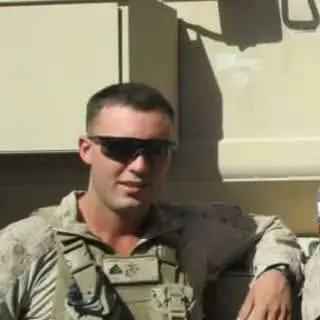
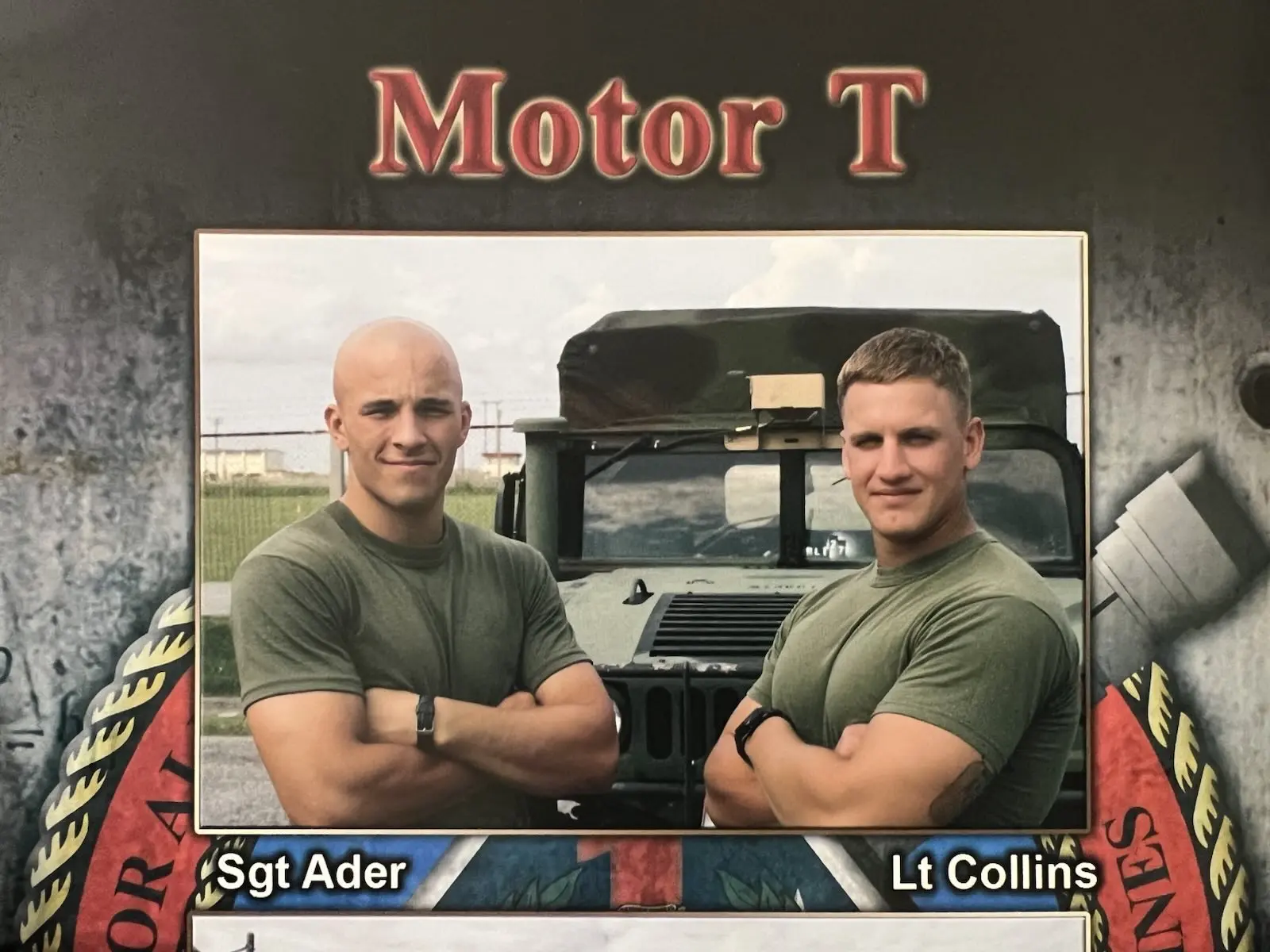
Sergeant Brett Ader and Lieutenant James Collins standing in front of a military vehicle at a Motor T display
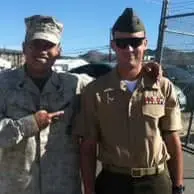
Motor T Sgt Ader and Lt Collins—the trust that helped shape Coal Train.

In my own words

Written from memory. Grounded in service.

I first shared these profiles publicly to honor Marines whose leadership carried weight when the conditions were uncertain and the stakes were real. Their stories deserve a permanent home.

These accounts have been lightly edited for clarity. Ranks reflect the period being described. The combat narratives include descriptions of enemy fire, improvised explosive devices, and battlefield recovery operations.

01 · Trust

“You’re Fired”

How one Marine earned all the trust amid chaos.

Sergeant Brett Ader

Read the full story

“You’re fired!” Not the kind of firing you might think, but a pivotal moment in my journey as a young second lieutenant leading a roughneck platoon of motor transport Marines on our 31st Marine Expeditionary Unit deployment to Southeast Asia. It was my first deployment, and for many of our Marines, their second. Morale was low, and the platoon needed a steady hand.

Amid the chaos, I met Corporal Brett Ader. He was on his way out of the Corps, but something about him caught my eye. Despite being labeled a “one foot out the door” Marine, I saw potential. I pulled some strings and brought him back to our platoon. Ader quickly became my inside man, thriving on the responsibility and proving himself a natural leader.

His journey from a young, knuckleheaded corporal to my most trusted counterpart was remarkable. He took charge, mentored junior Marines, and earned his way back into the unit. When our senior leadership changed, Ader stepped up. Together, we became a cohesive team, and his dedication helped transform the platoon into an elite force.

Training without excuses

During cold-weather training in Bridgeport, California, resources were limited. We improvised with rocks, terrain models, and whatever the ground gave us. It was unconventional, but it worked. Ader and I even had a run-in with our battalion commander, who—after the initial friction—recognized the initiative and hunger behind what we were doing.

Ader extended his service to join us in Afghanistan. With limited combat experience across the platoon, we relied on one another and trained relentlessly. His ability to inspire and lead became even clearer as we prepared for what none of us could fully predict.

Coal Train in Afghanistan

Ader managed more than 107 pieces of rolling stock valued above $13 million and oversaw the dispatch of more than 1,200 trip tickets. His meticulous management helped the section sustain a 93 percent readiness rate—essential to supporting battalion missions.

He participated in more than 60 tactical resupply convoys covering over 2,500 mishap-free miles and sustaining combat power for more than 900 Marines and Sailors. His roles ranged from convoy commander to security team leader, and his performance was flawless.

As a Marine Corps Martial Arts instructor, Ader created a program that allowed Marines to keep advancing even during combat operations. That work produced more than 30 belt upgrades and 400 hours of training, culminating in his own black belt.

His impact reached beyond the platoon. Working with the liaison officer at Camp Leatherneck, he supported the retrograde of 71 tactical vehicles and a refurbishment effort that distributed 62 vehicles across the area of operations.

Ader inspired me. He had charisma and knew how to use it up and down the ranks. He cared most for the junior Marines and thrived when they needed him. His journey—from a Marine nearing the exit to a central leader in our platoon—remains a testament to trust, resilience, and the impact of responsibility given at the right time.
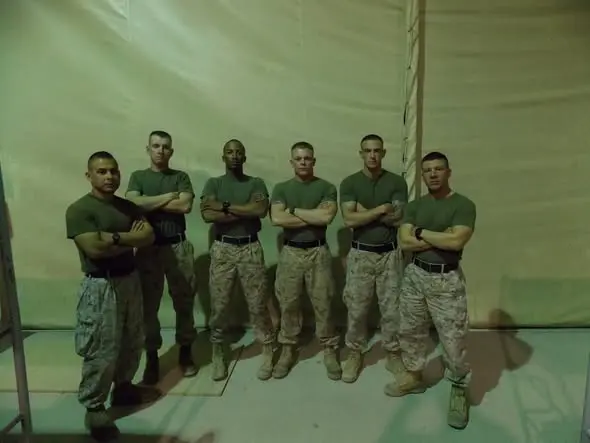
Gunnery Sergeant Christopher Rivera with Marines in green shirts and camouflage trousers during training
MCMAP training GySgt Rivera with Marines from the platoon.

02 · Readiness

A Modern-Day John Basilone

The unstoppable leadership of Gunnery Sergeant Christopher L. Rivera.

GySgt Christopher L. Rivera

Read the full story

A Motor Transportation Operations Marine by trade, Gunnery Sergeant Christopher L. Rivera served with 2nd Battalion, 7th Marines—an infantry battalion. His skill and leadership earned him a nomination for the John Basilone Award and made him stand out across the First Marine Division.

Objective Firefly

One of our most memorable operations was a night raid with the Rangers known as Objective Firefly. Major Philpot, our battalion operations officer, called and asked how quickly we could be ready. I went straight to Gunny, who was finishing a martial arts course under spotlights in the motor pool. We did not have enough trucks. Gunny grinned and made it happen.

We borrowed vehicles from other platoons and prepared for the Rangers’ first vehicle insertion for a night raid. The movement required a blacked-out insertion through darkness to preserve surprise. We were Coal Train, proud of our readiness, and the mission succeeded. GySgt Rivera was central to making it happen.

At first, neither I nor my Marines welcomed him with open arms. We were a rough unit with little experience under a strong senior enlisted leader. Gunny was exactly what we needed. I would wake early to get ahead, and he was already groomed and working. I would build a workout to challenge the Marines, and he already had a six-week fitness program in motion. He was relentless, and choosing to keep up made me better.

Leadership under fire

Rivera arrived in Sangin, Helmand Province, on September 25, 2012, as the attached Truck Company B platoon sergeant. Less than a month later, his tactical skill and initiative had made him the battalion motor transport operations chief. He integrated 2/7 Motor Transport and Truck Company Bravo into one cohesive element capable of resupply, troop transport, recovery, and maintenance missions.

On October 5, 2012, Rivera was commanding a resupply convoy when a towed vehicle detached and the convoy came under indirect fire, small-arms fire, and RPGs. He dismounted, took control of the recovery, and moved the convoy through the kill zone without casualties.

On November 20, he served as assistant convoy commander on a recovery mission for a Special Forces team that had struck an IED near the Ghorak Pass. Multiple IEDs and difficult terrain closed the obvious routes. Rivera devised an alternate path through a narrow passage and a village known for insurgent activity, bypassing the traps and completing the mission.

On December 13, during a convoy from Sangin to Kajaki, he led another recovery under fire—recovering a heavy vehicle and guiding six vehicles through complex terrain so the mission could continue.

Building Marines

Beyond the battlefield, Rivera invested in his Marines through MCMAP, professional military education, and a reading program based on the Commandant’s Professional Reading List. He also drove the work of upgrading and retrograding vehicles and equipment that sustained more than 2,000 personnel across remote positions.

His legacy is not only one of courage. It is one of preparation, accountability, and genuine care for Marines. He showed me what happens when a senior enlisted leader refuses to let standards slip—and refuses to let his people settle.

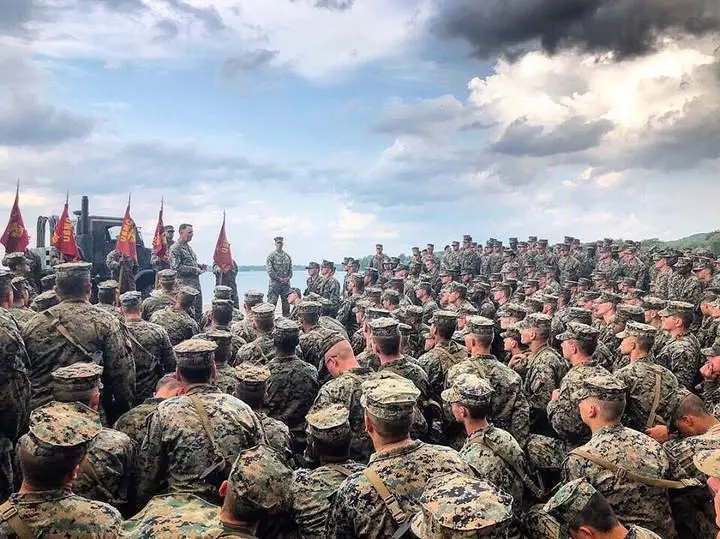
A large formation of Marines gathered outdoors
Still serving A later reserve formation shared with the original tribute.

03 · Courage

Coal Train’s Multi-Tool

The leadership of Sergeant Anthony Hernandez Jr.

Sgt Anthony Hernandez Jr.

Read the full story

In Helmand Province, one Marine repeatedly stood out for decisive leadership and unwavering courage. Sergeant Anthony Hernandez Jr. was a squad leader for the Motor Transport Platoon, responsible for ten Marines. His experience from earlier deployments was invaluable, and his example made him a cornerstone of our operations.

A day in Sangin

On October 5, 2012, Hernandez’s nine-vehicle convoy came under enemy ambush during a resupply mission. The convoy had halted after an unmanned vehicle separated from its towing mechanism. As two Marines dismounted to assess it, machine-gun fire began striking the vehicles.

Hernandez directed his driver to position their vehicle as cover, then dismounted under fire and ran to the disabled vehicle. Finding the Marines stunned by the sudden attack, he took control, gave each man a task, and began removing a tow bar lodged in a tire.

Indirect fire impacted nearby and two RPGs were fired at the convoy. Hernandez kept working. When the enemy fire slowed, he sprinted from vehicle to vehicle to recover every piece of towing equipment before returning to his own truck. His actions helped the convoy move out of enemy range without loss of life or equipment.

Another fight near Kajaki

On December 14, during a convoy from Kajaki to Sangin, insurgents launched a hasty attack. Hernandez was serving as a gunner. Even as rounds struck his vehicle, he identified a secondary enemy position near a compound roughly 500 meters away.

While other vehicles focused on the primary position, Hernandez gained positive identification and returned fire with his M240 machine gun. His quick action established fire superiority and forced the enemy to break contact, allowing the convoy to continue its mission.

Sergeant Hernandez embodied the Marine who could do whatever the mission required: lead a squad, diagnose chaos, protect others, and act decisively under fire. His recommendation for the Navy and Marine Corps Commendation Medal reflected that courage and professionalism.

04 · Resolve

The Unexpected Hero

My combat experience with Corporal Christine L. Sartin.

Cpl Christine L. Sartin

30Rounds absorbed by her vehicle while shielding Marines
Nearly 70Tactical convoys completed
$176KEquipment managed with precision
NAMNavy and Marine Corps Achievement Medal
Read the full story

In life, we often find heroes in unexpected places. Sometimes they are the quiet ones—the people who blend into the background until a moment of crisis reveals their character. Corporal Christine L. Sartin was one of those Marines.

When Cpl Sartin joined our infantry battalion, she was the first female Marine to do so. She came from the 1st Marine Division as a Motor Transport operator, ready to strengthen our transportation support. At a time when women were only beginning to integrate into expanded combat roles, her arrival was new territory for the battalion and for many of us.

Three weeks into the deployment

In early October, Sartin’s convoy was ambushed. Under heavy enemy fire, she maneuvered her vehicle to shield fellow Marines who were exposed while repairing a towed vehicle. Her truck took approximately 30 rounds. She did not flinch. Her actions protected the team and helped keep the mission moving.

Her bravery was not a one-time event. Throughout the deployment, she participated in nearly 70 tactical convoys, moved vital supplies, and helped sustain our combat readiness. Her attention to detail and her stewardship of equipment valued at $176,000 were critical to the platoon.

Sartin’s story is a testament to the courage and resilience of Marines—regardless of gender. She showed that leadership and heroism are not defined by rank, background, or anyone else’s expectations. They are defined by action: the willingness to step forward in danger and remain dedicated to the Marines beside you.

For that service, she received the Navy and Marine Corps Achievement Medal. Her legacy continues to remind me that the person who changes the outcome may be the person others least expected to carry the weight.

05 · Brotherhood

Brotherhood in the Battlefields

“It started in a bar. Now that sounds like a Marine story.”

Cpl Thomas H. Tansey

Corporal Thomas Tansey in Afghanistan wearing protective gear and sunglasses
Afghanistan Cpl Tansey during the deployment.
Corporal Thomas Tansey standing with another Marine
Brothers A deployment-era photograph.
Read the full story

Tansey and I arrived at 2nd Battalion, 7th Marines around the same time, each coming from a different path. He was a Motor T operator—likely a lance corporal then—and I was a young lieutenant. What followed forged an unbreakable bond.

A Chicago native rooted in the union and trades, Tansey found a temporary home in the Marine Corps. He integrated quickly, earning respect from senior Marines through the relentless cycle of training and deployment that defined our lives.

One night in San Diego, a typical weekend turned chaotic when a group of hecklers decided to test themselves against the Marines. In the confusion, Tansey and I found each other and stood together. From that night forward, the relationship transcended rank. We were not simply a corporal and a lieutenant. We were brothers.

That bond shaped a pivotal decision. When I was tasked with establishing our platoon’s foothold in Afghanistan, I chose Tansey to accompany me. His work as my navigator was crucial, and he never disappointed.

The recovery mission

On November 20, 2012, Tansey served as vehicle commander for the lead vehicle on a recovery mission near the Ghorak Pass. His route planning and execution were vital in terrain saturated with IED threats.

Tansey identified a command-wired IED in our path and then a second device 30 meters beyond it, each packed with approximately 40 pounds of homemade explosives. When the last vehicle reported a third IED at its position, the convoy was trapped in canalizing terrain with no safe direction to move.

Using his Blue Force Tracker and gyro camera, Tansey found a small route out of the wadi and into Wushton Village. It appeared nearly impossible for our vehicles, but his precise guidance moved the convoy through.

At the downed vehicle, he immediately planned the extraction. Minutes after we departed, his team discovered another IED and safely neutralized the danger. For 22 kilometers, Tansey guided Coal Train through cliffs, narrow paths, and enemy traps. By 2000, he had led us back to friendly lines at COP Shamsher without a single casualty.

His calm under pressure upheld the highest traditions of the Corps and earned a recommendation for the Navy and Marine Corps Achievement Medal. For me, the mission also confirmed something that began years earlier in a bar: Tansey was my brother, and I trusted him with all of us.

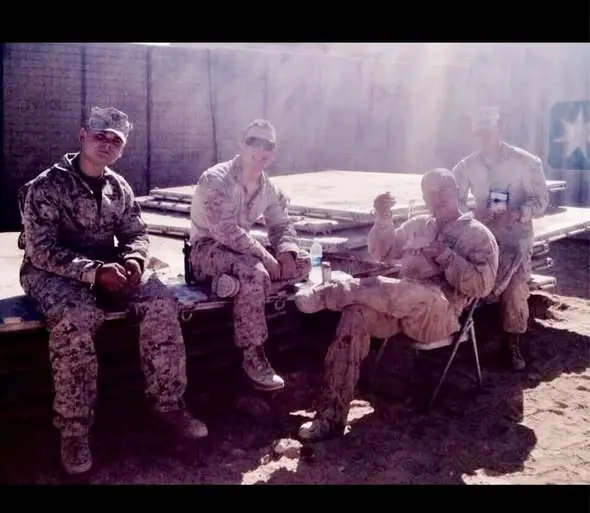
Four Coal Train Marines together in Afghanistan
Coal Train Marines in Afghanistan from the original Gonzalez tribute.

06 · Ingenuity

The Unsung Hero of Helmand

A mechanic who could wield a wrench as confidently as a machine gun.

Cpl Daniel A. Gonzalez

Read the full story

In Helmand Province, where dust covered everything and danger could emerge without warning, Corporal Daniel A. Gonzalez distinguished himself through bravery, technical skill, and unwavering dedication to his Marines.

A day in the life

On December 13, 2012, during Operation Enduring Freedom, Gonzalez was serving as vehicle commander and on-site mechanic for the MK36 Wrecker Recovery Vehicle. Coal Train was moving from Sangin to Kajaki District, with the wrecker eighth in a convoy traveling 36 kilometers of contested road.

Halfway through the mission, the convoy came under small-arms and machine-gun fire in the Loy Mandeh Proper area. A Mine Resistant Ambush Protected Buffalo had rolled over roughly 200 meters ahead. Gonzalez directed his operator to the scene.

The Buffalo exceeded the wrecker’s normal recovery capacity. Undeterred, Gonzalez devised a plan using additional MRAPs to help right the vehicle. Under enemy fire, he dismounted and went to work. Within minutes, the Buffalo was upright—but it would not start, and towing it was not practical.

Gonzalez had not worked on that exact MRAP variant before. He relied on his mechanical understanding, climbed onto the vehicle while fire continued, reset the battery, added engine oil, and brought the Buffalo back to life.

His calm thinking and technical expertise allowed 55 Marines and 16 vehicles to move through the kill zone and complete the mission. He embodied a truth every good unit understands: the Marine who knows how to solve the impossible problem can be as decisive as any weapon on the battlefield.

Corporal Gonzalez, we salute you. Your story is a reminder of the countless Marines whose courage appears not in headlines, but in the moment everyone else needs them to make the mission move again.

Formation · Deployment · Command

The officer inside these stories.

Leadership is not a straight line from training to competence. It is formation, responsibility, failure, correction, and the obligation to remember who carried the mission with you.

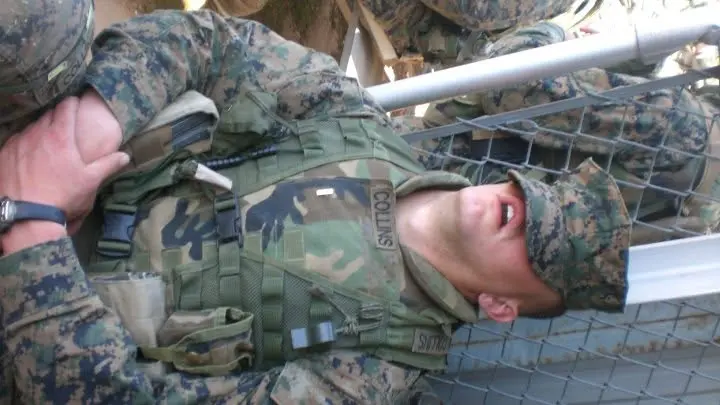
James Collins asleep in field gear during training at The Basic School
The Basic School The sleep-deprivation lesson started early.
Lieutenant James Collins in desert camouflage before deployment
Pre-deployment A young lieutenant before Afghanistan.
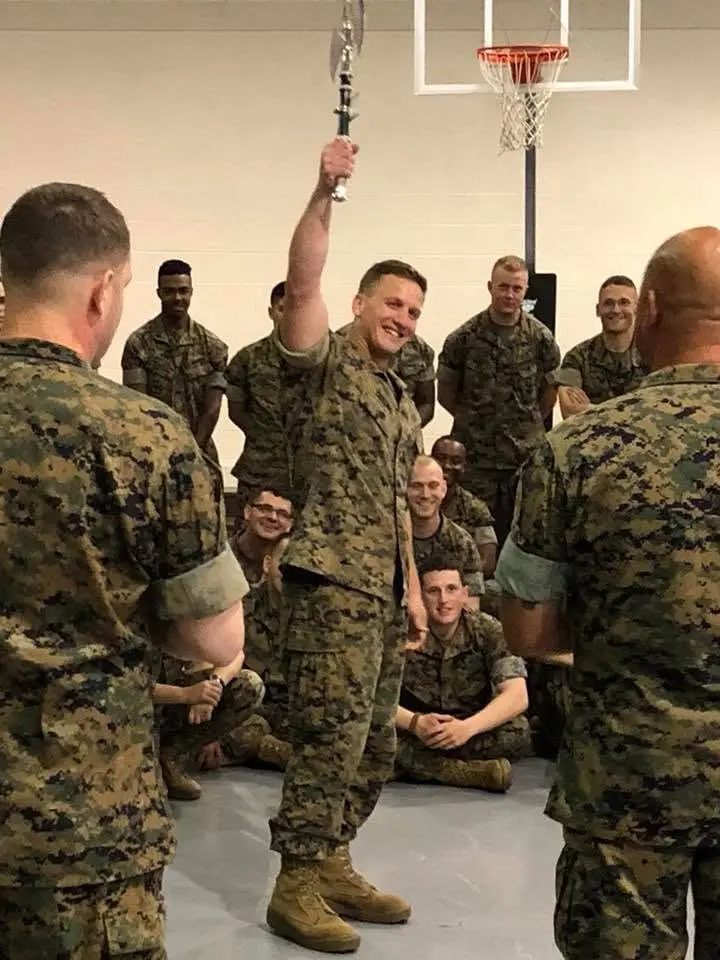
James Collins holding the ceremonial axe presented after his first company command
First company command The H&S Company, 3/25 change-of-command axe.

07 · Accountability

I Failed…Hard

A story about sleep, complacency, and the Marine whose standard exposed my own failure.

LCpl Jonathan Velasco

Read the full story

Sleep deprivation is a cornerstone of Marine officer training—a brutal but essential part of building young officers. The hardest part was not the physical fitness, the academics, or the chaos. It was staying awake. We tried everything: hydrating, standing, chugging water. Nothing solved the reality of operating on minimal sleep for days.

I did not master it. I passed Officer Candidate School, but not with flying colors. Worse, I failed to correct the deficiency. Then I failed hard.

The warning shot

I once woke to an Afghan convoy moving only feet from where I had fallen asleep on a hilltop at FOB Nolay in southern Sangin. I had been sitting peacefully when my eyes grew heavy. For about five seconds after waking, I thought I was a one-man defense against an army. Nothing happened, but the moment was a warning.

The failure that mattered

Lance Corporal Jonathan Velasco was my driver. He carried me—the convoy commander—on missions for six months. His vehicle drew danger again and again across more than 100 operations and 2,000 miles. Mortars came in and he pressed forward. Reports of ambushes came through and he drove faster. I watched him navigate IED-filled wadis with extraordinary discipline. He was the picture of military bearing.

Then, late in the deployment, I fell asleep. The Marines had become capable enough to lead most of the missions. I began to mentally check out. My thoughts drifted home. Instead of remaining locked in on 32 Marines moving through enemy territory, I relaxed.

We were on Highway 1, a few hours from hot chow. I got comfortable, my eyes grew heavy, and the next thing I knew we had sideswiped a civilian tractor-trailer. No one was hurt. The damage was resolved. But I knew why it happened—and Velasco knew too. When I let off the gas, the unit did the same. When my vigilance slipped, I made every driver weaker.

I still remember the look in Velasco’s eyes. The collision was repairable. The loss of confidence was different. I had failed a Marine who had been perfect for me when the stakes were highest.

Today, sleep can still feel like the opposite of being awake. In combat, being awake meant being alive and responsible for the mission. That does not make sleeplessness a virtue. It is simply part of the truth I carried home: I learned to value every waking hour because I once failed to guard one.

What Velasco’s record shows

My failure should not obscure his courage. On October 5, 2012, after a tow-bar failure halted Coal Train under machine-gun, RPG, and mortar fire, Velasco dismounted with his vehicle commander to attempt repairs. When the tow bar could not be restored, he climbed through the unmanned MRAP’s gunner turret, started the vehicle, and drove it out of the kill zone without a vehicle commander or communications.

He later earned Marine of the Quarter after completing more than 40 convoy missions, traveling over 1,200 mishap-free miles, and helping move nearly three million pounds of equipment and 2,600 gallons of fuel across the battlespace. He was recommended for the Navy and Marine Corps Achievement Medal with Combat Distinguishing Device.

Read the award citation
For heroic achievement in the superior performance of his duties while serving as vehicle operator, Headquarters and Service Company, 2d Battalion, 7th Marines, on 5 October 2012 in support of Operation Enduring Freedom. During a convoy in southern Sangin, Afghanistan, his platoon came under accurate enemy machine-gun and rocket fire from multiple positions. With complete disregard for his own safety, Lance Corporal Velasco dismounted his vehicle, exposed himself to enemy fire, climbed through the gunner’s turret, and maneuvered the disabled vehicle out of the engagement area. His physical courage inspired his fellow Marines and ensured mission accomplishment.

Velasco’s professionalism remains the standard in this story. My mistake remains mine. Leadership requires the honesty to hold both truths at the same time.

The mission moved because Marines like these refused to let it stop.